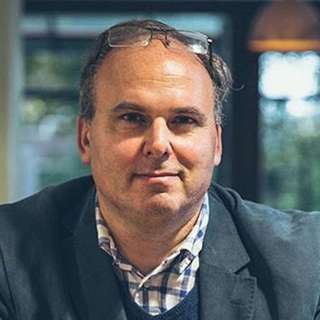

#149 – Tim LeBon on how altruistic perfectionism is self-defeating

#149 – Tim LeBon on how altruistic perfectionism is self-defeating

Being a good and successful person is core to your identity. You place great importance on meeting the high moral, professional, or academic standards you set yourself.

But inevitably, something goes wrong and you fail to meet that high bar. Now you feel terrible about yourself, and worry others are judging you for your failure. Feeling low and reflecting constantly on whether you're doing as much as you think you should makes it hard to focus and get things done. So now you're performing below a normal level, making you feel even more ashamed of yourself. Rinse and repeat.

This is the disastrous cycle today's guest, Tim LeBon — registered psychotherapist, accredited CBT therapist, life coach, and author of 365 Ways to Be More Stoic — has observed in many clients with a perfectionist mindset.

Links to learn more, summary and full transcript.

Tim has provided therapy to a number of 80,000 Hours readers — people who have found that the very high expectations they had set for themselves were holding them back. Because of our focus on “doing the most good you can,” Tim thinks 80,000 Hours both attracts people with this style of thinking and then exacerbates it.

But Tim, having studied and written on moral philosophy, is sympathetic to the idea of helping others as much as possible, and is excited to help clients pursue that — sustainably — if it's their goal.

Tim has treated hundreds of clients with all sorts of mental health challenges. But in today's conversation, he shares the lessons he has learned working with people who take helping others so seriously that it has become burdensome and self-defeating — in particular, how clients can approach this challenge using the treatment he's most enthusiastic about: cognitive behavioural therapy.

Untreated, perfectionism might not cause problems for many years — it might even seem positive providing a source of motivation to work hard. But it's hard to feel truly happy and secure, and free to take risks, when we’re just one failure away from our self-worth falling through the floor. And if someone slips into the positive feedback loop of shame described above, the end result can be depression and anxiety that's hard to shake.

But there's hope. Tim has seen clients make real progress on their perfectionism by using CBT techniques like exposure therapy. By doing things like experimenting with more flexible standards — for example, sending early drafts to your colleagues, even if it terrifies you — you can learn that things will be okay, even when you're not perfect.

In today's extensive conversation, Tim and Rob cover:

• How perfectionism is different from the pursuit of excellence, scrupulosity, or an OCD personality
• What leads people to adopt a perfectionist mindset
• How 80,000 Hours contributes to perfectionism among some readers and listeners, and what it might change about its advice to address this
• What happens in a session of cognitive behavioural therapy for someone struggling with perfectionism, and what factors are key to making progress
• Experiments to test whether one's core beliefs (‘I need to be perfect to be valued’) are true
• Using exposure therapy to treat phobias
• How low-self esteem and imposter syndrome are related to perfectionism
• Stoicism as an approach to life, and why Tim is enthusiastic about it
• What the Stoics do better than utilitarian philosophers and vice versa
• And how to decide which are the best virtues to live by

Get this episode by subscribing to our podcast on the world’s most pressing problems and how to solve them: type ‘80,000 Hours’ into your podcasting app.

Producer: Keiran Harris
Audio mastering: Simon Monsour and Ben Cordell
Transcriptions: Katy Moore

Episoder(333)

#67 Classic episode – David Chalmers on the nature and ethics of consciousness

#67 Classic episode – David Chalmers on the nature and ethics of consciousness

Rebroadcast: this episode was originally released in December 2019. What is it like to be you right now? You're seeing this text on the screen, smelling the coffee next to you, and feeling the warmth...

3 Jan 20224h 42min

#59 Classic episode - Cass Sunstein on how change happens, and why it's so often abrupt & unpredictable

#59 Classic episode - Cass Sunstein on how change happens, and why it's so often abrupt & unpredictable

Rebroadcast: this episode was originally released in June 2019. It can often feel hopeless to be an activist seeking social change on an obscure issue where most people seem opposed or at best indiff...

27 Des 20211h 43min

#119 – Andrew Yang on our very long-term future, and other topics most politicians won’t touch

#119 – Andrew Yang on our very long-term future, and other topics most politicians won’t touch

Andrew Yang — past presidential candidate, founder of the Forward Party, and leader of the 'Yang Gang' — is kind of a big deal, but is particularly popular among listeners to The 80,000 Hours Podcast....

20 Des 20211h 25min

#118 – Jaime Yassif on safeguarding bioscience to prevent catastrophic lab accidents and bioweapons development

#118 – Jaime Yassif on safeguarding bioscience to prevent catastrophic lab accidents and bioweapons development

If a rich country were really committed to pursuing an active biological weapons program, there’s not much we could do to stop them. With enough money and persistence, they’d be able to buy equipment,...

13 Des 20212h 15min

#117 – David Denkenberger on using paper mills and seaweed to feed everyone in a catastrophe, ft Sahil Shah

#117 – David Denkenberger on using paper mills and seaweed to feed everyone in a catastrophe, ft Sahil Shah

If there's a nuclear war followed by nuclear winter, and the sun is blocked out for years, most of us are going to starve, right? Well, currently, probably we would, because humanity hasn't done much ...

29 Nov 20213h 8min

#116 – Luisa Rodriguez on why global catastrophes seem unlikely to kill us all

#116 – Luisa Rodriguez on why global catastrophes seem unlikely to kill us all

If modern human civilisation collapsed — as a result of nuclear war, severe climate change, or a much worse pandemic than COVID-19 — billions of people might die.That's terrible enough to contemplate....

19 Nov 20213h 45min

#115 – David Wallace on the many-worlds theory of quantum mechanics and its implications

#115 – David Wallace on the many-worlds theory of quantum mechanics and its implications

Quantum mechanics — our best theory of atoms, molecules, and the subatomic particles that make them up — underpins most of modern physics. But there are varying interpretations of what it means, all o...

12 Nov 20213h 9min

#114 – Maha Rehman on working with governments to rapidly deliver masks to millions of people

#114 – Maha Rehman on working with governments to rapidly deliver masks to millions of people

It’s hard to believe, but until recently there had never been a large field trial that addressed these simple and obvious questions:1. When ordinary people wear face masks, does it actually reduce the...

22 Okt 20211h 42min

Populært innen Fakta

fastlegen
dine-penger-pengeradet
relasjonspodden-med-dora-thorhallsdottir-kjersti-idem
foreldreradet
treningspodden
rss-strid-de-norske-borgerkrigene
mikkels-paskenotter
rss-bisarr-historie
jakt-og-fiskepodden
sinnsyn
rss-kunsten-a-leve
rss-sunn-okonomi
hverdagspsyken
tomprat-med-gunnar-tjomlid
rss-bak-luftfarten
ukast
fryktlos
gravid-uke-for-uke
lederskap-nhhs-podkast-om-ledelse
rss-kull