#189 – Rachel Glennerster on why we still don’t have vaccines that could save millions

#189 – Rachel Glennerster on why we still don’t have vaccines that could save millions

"You can’t charge what something is worth during a pandemic. So we estimated that the value of one course of COVID vaccine in January 2021 was over $5,000. They were selling for between $6 and $40. So nothing like their social value. Now, don’t get me wrong. I don’t think that they should have charged $5,000 or $6,000. That’s not ethical. It’s also not economically efficient, because they didn’t cost $5,000 at the marginal cost. So you actually want low price, getting out to lots of people.

"But it shows you that the market is not going to reward people who do the investment in preparation for a pandemic — because when a pandemic hits, they’re not going to get the reward in line with the social value. They may even have to charge less than they would in a non-pandemic time. So prepping for a pandemic is not an efficient market strategy if I’m a firm, but it’s a very efficient strategy for society, and so we’ve got to bridge that gap." —Rachel Glennerster

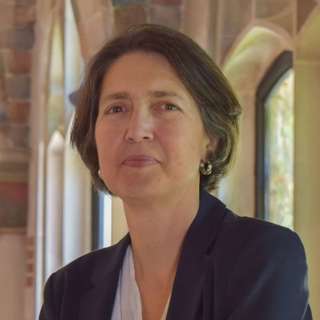
In today’s episode, host Luisa Rodriguez speaks to Rachel Glennerster — associate professor of economics at the University of Chicago and a pioneer in the field of development economics — about how her team’s new Market Shaping Accelerator aims to leverage market forces to drive innovations that can solve pressing world problems.

Links to learn more, highlights, and full transcript.

They cover:

  • How market failures and misaligned incentives stifle critical innovations for social goods like pandemic preparedness, climate change interventions, and vaccine development.
  • How “pull mechanisms” like advance market commitments (AMCs) can help overcome these challenges — including concrete examples like how one AMC led to speeding up the development of three vaccines which saved around 700,000 lives in low-income countries.
  • The challenges in designing effective pull mechanisms, from design to implementation.
  • Why it’s important to tie innovation incentives to real-world impact and uptake, not just the invention of a new technology.
  • The massive benefits of accelerating vaccine development, in some cases, even if it’s only by a few days or weeks.
  • The case for a $6 billion advance market commitment to spur work on a universal COVID-19 vaccine.
  • The shortlist of ideas from the Market Shaping Accelerator’s recent Innovation Challenge that use pull mechanisms to address market failures around improving indoor air quality, repurposing generic drugs for alternative uses, and developing eco-friendly air conditioners for a warming planet.
  • “Best Buys” and “Bad Buys” for improving education systems in low- and middle-income countries, based on evidence from over 400 studies.
  • Lessons from Rachel’s career at the forefront of global development, and how insights from economics can drive transformative change.
  • And much more.

Chapters:

  • The Market Shaping Accelerator (00:03:33)
  • Pull mechanisms for innovation (00:13:10)
  • Accelerating the pneumococcal and COVID vaccines (00:19:05)
  • Advance market commitments (00:41:46)
  • Is this uncertainty hard for funders to plan around? (00:49:17)
  • The story of the malaria vaccine that wasn’t (00:57:15)
  • Challenges with designing and implementing AMCs and other pull mechanisms (01:01:40)
  • Universal COVID vaccine (01:18:14)
  • Climate-resilient crops (01:34:09)
  • The Market Shaping Accelerator’s Innovation Challenge (01:45:40)
  • Indoor air quality to reduce respiratory infections (01:49:09)
  • Repurposing generic drugs (01:55:50)
  • Clean air conditioning units (02:02:41)
  • Broad-spectrum antivirals for pandemic prevention (02:09:11)
  • Improving education in low- and middle-income countries (02:15:53)
  • What’s still weird for Rachel about living in the US? (02:45:06)

Producer and editor: Keiran Harris
Audio Engineering Lead: Ben Cordell
Technical editing: Simon Monsour, Milo McGuire, and Dominic Armstrong
Additional content editing: Katy Moore and Luisa Rodriguez
Transcriptions: Katy Moore

Episoder(333)

We just put up a new compilation of ten core episodes of the show

We just put up a new compilation of ten core episodes of the show

We recently launched a new podcast feed that might be useful to you and people you know. It's called Effective Altruism: Ten Global Problems, and it's a collection of ten top episodes of this show, se...

20 Okt 20213min

#113 – Varsha Venugopal on using gossip to help vaccinate every child in India

#113 – Varsha Venugopal on using gossip to help vaccinate every child in India

Our failure to make sure all kids globally get all of their basic vaccinations leads to 1.5 million child deaths every year.According to today’s guest, Varsha Venugopal, for the great majority this ha...

18 Okt 20212h 5min

#112 – Carl Shulman on the common-sense case for existential risk work and its practical implications

#112 – Carl Shulman on the common-sense case for existential risk work and its practical implications

Preventing the apocalypse may sound like an idiosyncratic activity, and it sometimes is justified on exotic grounds, such as the potential for humanity to become a galaxy-spanning civilisation.But the...

5 Okt 20213h 48min

#111 – Mushtaq Khan on using institutional economics to predict effective government reforms

#111 – Mushtaq Khan on using institutional economics to predict effective government reforms

If you’re living in the Niger Delta in Nigeria, your best bet at a high-paying career is probably ‘artisanal refining’ — or, in plain language, stealing oil from pipelines. The resulting oil spills da...

10 Sep 20213h 20min

#110 – Holden Karnofsky on building aptitudes and kicking ass

#110 – Holden Karnofsky on building aptitudes and kicking ass

Holden Karnofsky helped create two of the most influential organisations in the effective philanthropy world. So when he outlines a different perspective on career advice than the one we present at 80...

26 Aug 20212h 46min

#109 – Holden Karnofsky on the most important century

#109 – Holden Karnofsky on the most important century

Will the future of humanity be wild, or boring? It's natural to think that if we're trying to be sober and measured, and predict what will really happen rather than spin an exciting story, it's more l...

19 Aug 20212h 19min

#108 – Chris Olah on working at top AI labs without an undergrad degree

#108 – Chris Olah on working at top AI labs without an undergrad degree

Chris Olah has had a fascinating and unconventional career path. Most people who want to pursue a research career feel they need a degree to get taken seriously. But Chris not only doesn't have a P...

11 Aug 20211h 33min

#107 – Chris Olah on what the hell is going on inside neural networks

#107 – Chris Olah on what the hell is going on inside neural networks

Big machine learning models can identify plant species better than any human, write passable essays, beat you at a game of Starcraft 2, figure out how a photo of Tobey Maguire and the word 'spider' ar...

4 Aug 20213h 9min

Populært innen Fakta

fastlegen
dine-penger-pengeradet
relasjonspodden-med-dora-thorhallsdottir-kjersti-idem
foreldreradet
treningspodden
rss-strid-de-norske-borgerkrigene
mikkels-paskenotter
rss-bisarr-historie
jakt-og-fiskepodden
rss-sunn-okonomi
sinnsyn
rss-kunsten-a-leve
hverdagspsyken
tomprat-med-gunnar-tjomlid
rss-bak-luftfarten
fryktlos
ukast
rss-mind-body-podden
level-up-med-anniken-binz
rss-kull