
#189 – Rachel Glennerster on why we still don’t have vaccines that could save millions

#189 – Rachel Glennerster on why we still don’t have vaccines that could save millions

"You can’t charge what something is worth during a pandemic. So we estimated that the value of one course of COVID vaccine in January 2021 was over $5,000. They were selling for between $6 and $40. So nothing like their social value. Now, don’t get me wrong. I don’t think that they should have charged $5,000 or $6,000. That’s not ethical. It’s also not economically efficient, because they didn’t cost $5,000 at the marginal cost. So you actually want low price, getting out to lots of people.

"But it shows you that the market is not going to reward people who do the investment in preparation for a pandemic — because when a pandemic hits, they’re not going to get the reward in line with the social value. They may even have to charge less than they would in a non-pandemic time. So prepping for a pandemic is not an efficient market strategy if I’m a firm, but it’s a very efficient strategy for society, and so we’ve got to bridge that gap." —Rachel Glennerster

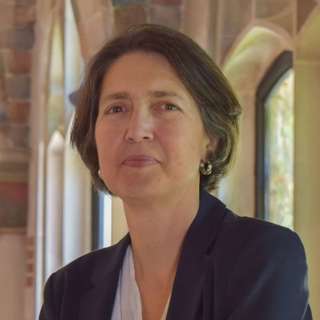
In today’s episode, host Luisa Rodriguez speaks to Rachel Glennerster — associate professor of economics at the University of Chicago and a pioneer in the field of development economics — about how her team’s new Market Shaping Accelerator aims to leverage market forces to drive innovations that can solve pressing world problems.

Links to learn more, highlights, and full transcript.

They cover:

  • How market failures and misaligned incentives stifle critical innovations for social goods like pandemic preparedness, climate change interventions, and vaccine development.
  • How “pull mechanisms” like advance market commitments (AMCs) can help overcome these challenges — including concrete examples like how one AMC led to speeding up the development of three vaccines which saved around 700,000 lives in low-income countries.
  • The challenges in designing effective pull mechanisms, from design to implementation.
  • Why it’s important to tie innovation incentives to real-world impact and uptake, not just the invention of a new technology.
  • The massive benefits of accelerating vaccine development, in some cases, even if it’s only by a few days or weeks.
  • The case for a $6 billion advance market commitment to spur work on a universal COVID-19 vaccine.
  • The shortlist of ideas from the Market Shaping Accelerator’s recent Innovation Challenge that use pull mechanisms to address market failures around improving indoor air quality, repurposing generic drugs for alternative uses, and developing eco-friendly air conditioners for a warming planet.
  • “Best Buys” and “Bad Buys” for improving education systems in low- and middle-income countries, based on evidence from over 400 studies.
  • Lessons from Rachel’s career at the forefront of global development, and how insights from economics can drive transformative change.
  • And much more.

Chapters:

  • The Market Shaping Accelerator (00:03:33)
  • Pull mechanisms for innovation (00:13:10)
  • Accelerating the pneumococcal and COVID vaccines (00:19:05)
  • Advance market commitments (00:41:46)
  • Is this uncertainty hard for funders to plan around? (00:49:17)
  • The story of the malaria vaccine that wasn’t (00:57:15)
  • Challenges with designing and implementing AMCs and other pull mechanisms (01:01:40)
  • Universal COVID vaccine (01:18:14)
  • Climate-resilient crops (01:34:09)
  • The Market Shaping Accelerator’s Innovation Challenge (01:45:40)
  • Indoor air quality to reduce respiratory infections (01:49:09)
  • Repurposing generic drugs (01:55:50)
  • Clean air conditioning units (02:02:41)
  • Broad-spectrum antivirals for pandemic prevention (02:09:11)
  • Improving education in low- and middle-income countries (02:15:53)
  • What’s still weird for Rachel about living in the US? (02:45:06)

Producer and editor: Keiran Harris
Audio Engineering Lead: Ben Cordell
Technical editing: Simon Monsour, Milo McGuire, and Dominic Armstrong
Additional content editing: Katy Moore and Luisa Rodriguez
Transcriptions: Katy Moore

Episoder(333)

#106 – Cal Newport on an industrial revolution for office work

#106 – Cal Newport on an industrial revolution for office work

If you wanted to start a university department from scratch, and attract as many superstar researchers as possible, what’s the most attractive perk you could offer?How about just not needing an email ...

28 Jul 20211h 53min

#105 – Alexander Berger on improving global health and wellbeing in clear and direct ways

#105 – Alexander Berger on improving global health and wellbeing in clear and direct ways

The effective altruist research community tries to identify the highest impact things people can do to improve the world. Unsurprisingly, given the difficulty of such a massive and open-ended project,...

12 Jul 20212h 54min

#104 – Pardis Sabeti on the Sentinel system for detecting and stopping pandemics

#104 – Pardis Sabeti on the Sentinel system for detecting and stopping pandemics

When the first person with COVID-19 went to see a doctor in Wuhan, nobody could tell that it wasn’t a familiar disease like the flu — that we were dealing with something new. How much death and destru...

29 Jun 20212h 20min

#103 – Max Roser on building the world's best source of COVID-19 data at Our World in Data

#103 – Max Roser on building the world's best source of COVID-19 data at Our World in Data

History is filled with stories of great people stepping up in times of crisis. Presidents averting wars; soldiers leading troops away from certain death; data scientists sleeping on the office floor t...

21 Jun 20212h 22min

#102 – Tom Moynihan on why prior generations missed some of the biggest priorities of all

#102 – Tom Moynihan on why prior generations missed some of the biggest priorities of all

It can be tough to get people to truly care about reducing existential risks today. But spare a thought for the longtermist of the 17th century: they were surrounded by people who thought extinction w...

11 Jun 20213h 56min

#101 – Robert Wright on using cognitive empathy to save the world

#101 – Robert Wright on using cognitive empathy to save the world

In 2003, Saddam Hussein refused to let Iraqi weapons scientists leave the country to be interrogated. Given the overwhelming domestic support for an invasion at the time, most key figures in the U.S. ...

28 Mai 20211h 36min

#100 – Having a successful career with depression, anxiety and imposter syndrome

#100 – Having a successful career with depression, anxiety and imposter syndrome

Today's episode is one of the most remarkable and really, unique, pieces of content we’ve ever produced (and I can say that because I had almost nothing to do with making it!). The producer of this ...

19 Mai 20212h 51min

#99 – Leah Garcés on turning adversaries into allies to change the chicken industry

#99 – Leah Garcés on turning adversaries into allies to change the chicken industry

For a chance to prevent enormous amounts of suffering, would you be brave enough to drive five hours to a remote location to meet a man who seems likely to be your enemy, knowing that it might be an a...

13 Mai 20212h 26min

Populært innen Fakta

fastlegen
dine-penger-pengeradet
relasjonspodden-med-dora-thorhallsdottir-kjersti-idem
foreldreradet
treningspodden
rss-strid-de-norske-borgerkrigene
mikkels-paskenotter
rss-bisarr-historie
jakt-og-fiskepodden
rss-sunn-okonomi
sinnsyn
rss-kunsten-a-leve
hverdagspsyken
tomprat-med-gunnar-tjomlid
rss-bak-luftfarten
fryktlos
ukast
rss-mind-body-podden
level-up-med-anniken-binz
rss-kull