#219 – Toby Ord on graphs AI companies would prefer you didn't (fully) understand

#219 – Toby Ord on graphs AI companies would prefer you didn't (fully) understand

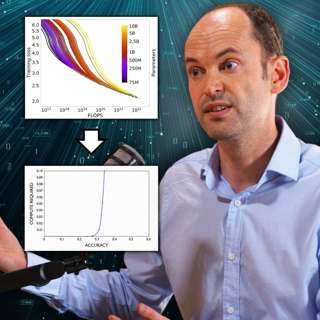
The era of making AI smarter just by making it bigger is ending. But that doesn’t mean progress is slowing down — far from it. AI models continue to get much more powerful, just using very different methods, and those underlying technical changes force a big rethink of what coming years will look like.

Toby Ord — Oxford philosopher and bestselling author of The Precipice — has been tracking these shifts and mapping out the implications both for governments and our lives.

Links to learn more, video, highlights, and full transcript: https://80k.info/to25

As he explains, until recently anyone can access the best AI in the world “for less than the price of a can of Coke.” But unfortunately, that’s over.

What changed? AI companies first made models smarter by throwing a million times as much computing power at them during training, to make them better at predicting the next word. But with high quality data drying up, that approach petered out in 2024.

So they pivoted to something radically different: instead of training smarter models, they’re giving existing models dramatically more time to think — leading to the rise in “reasoning models” that are at the frontier today.

The results are impressive but this extra computing time comes at a cost: OpenAI’s o3 reasoning model achieved stunning results on a famous AI test by writing an Encyclopedia Britannica’s worth of reasoning to solve individual problems at a cost of over $1,000 per question.

This isn’t just technical trivia: if this improvement method sticks, it will change much about how the AI revolution plays out, starting with the fact that we can expect the rich and powerful to get access to the best AI models well before the rest of us.

Toby and host Rob discuss the implications of all that, plus the return of reinforcement learning (and resulting increase in deception), and Toby's commitment to clarifying the misleading graphs coming out of AI companies — to separate the snake oil and fads from the reality of what's likely a "transformative moment in human history."

Recorded on May 23, 2025.

Chapters:

  • Cold open (00:00:00)
  • Toby Ord is back — for a 4th time! (00:01:20)
  • Everything has changed (and changed again) since 2020 (00:01:37)
  • Is x-risk up or down? (00:07:47)
  • The new scaling era: compute at inference (00:09:12)
  • Inference scaling means less concentration (00:31:21)
  • Will rich people get access to AGI first? Will the rest of us even know? (00:35:11)
  • The new regime makes 'compute governance' harder (00:41:08)
  • How 'IDA' might let AI blast past human level — or not (00:50:14)
  • Reinforcement learning brings back 'reward hacking' agents (01:04:56)
  • Will we get warning shots? Will they even help? (01:14:41)
  • The scaling paradox (01:22:09)
  • Misleading charts from AI companies (01:30:55)
  • Policy debates should dream much bigger (01:43:04)
  • Scientific moratoriums have worked before (01:56:04)
  • Might AI 'go rogue' early on? (02:13:16)
  • Lamps are regulated much more than AI (02:20:55)
  • Companies made a strategic error shooting down SB 1047 (02:29:57)
  • Companies should build in emergency brakes for their AI (02:35:49)
  • Toby's bottom lines (02:44:32)


Tell us what you thought! https://forms.gle/enUSk8HXiCrqSA9J8

Video editing: Simon Monsour
Audio engineering: Ben Cordell, Milo McGuire, Simon Monsour, and Dominic Armstrong
Music: Ben Cordell
Camera operator: Jeremy Chevillotte
Transcriptions and web: Katy Moore

Episoder(333)

#20 - Bruce Friedrich on inventing outstanding meat substitutes to end speciesism & factory farming

#20 - Bruce Friedrich on inventing outstanding meat substitutes to end speciesism & factory farming

Before the US Civil War, it was easier for the North to morally oppose slavery. Why? Because unlike the South they weren’t profiting much from its existence. The fight for abolition was partly won bec...

19 Feb 20181h 18min
#19 - Samantha Pitts-Kiefer on working next to the White House trying to prevent nuclear war

#19 - Samantha Pitts-Kiefer on working next to the White House trying to prevent nuclear war

Rogue elements within a state’s security forces enrich dozens of kilograms of uranium. It’s then assembled into a crude nuclear bomb. The bomb is transported on a civilian aircraft to Washington D.C, ...

14 Feb 20181h 4min
#18 - Ofir Reich on using data science to end poverty & the spurious action-inaction distinction

#18 - Ofir Reich on using data science to end poverty & the spurious action-inaction distinction

Ofir Reich started out doing math in the military, before spending 8 years in tech startups - but then made a sharp turn to become a data scientist focussed on helping the global poor. At UC Berkeley...

31 Jan 20181h 18min
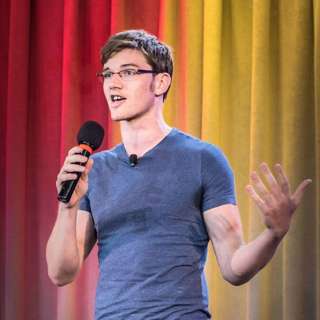
#17 - Will MacAskill on moral uncertainty, utilitarianism & how to avoid being a moral monster

#17 - Will MacAskill on moral uncertainty, utilitarianism & how to avoid being a moral monster

Immanuel Kant is a profoundly influential figure in modern philosophy, and was one of the earliest proponents for universal democracy and international cooperation. He also thought that women have no ...

19 Jan 20181h 52min

#16 - Michelle Hutchinson on global priorities research & shaping the ideas of intellectuals

#16 - Michelle Hutchinson on global priorities research & shaping the ideas of intellectuals

In the 40s and 50s neoliberalism was a fringe movement within economics. But by the 80s it had become a dominant school of thought in public policy, and achieved major policy changes across the Englis...

22 Des 201755min
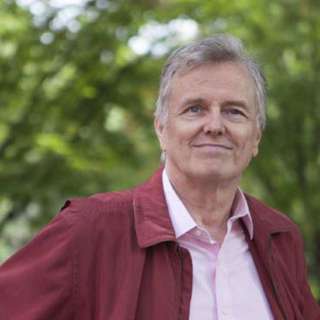
#15 - Phil Tetlock on how chimps beat Berkeley undergrads and when it’s wise to defer to the wise

#15 - Phil Tetlock on how chimps beat Berkeley undergrads and when it’s wise to defer to the wise

Prof Philip Tetlock is a social science legend. Over forty years he has researched whose predictions we can trust, whose we can’t and why - and developed methods that allow all of us to be better at p...

20 Nov 20171h 24min
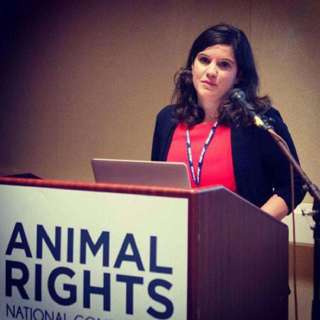
#14 - Sharon Nunez & Jose Valle on going undercover to expose animal abuse

#14 - Sharon Nunez & Jose Valle on going undercover to expose animal abuse

What if you knew that ducks were being killed with pitchforks? Rabbits dumped alive into containers? Or pigs being strangled with forklifts? Would you be willing to go undercover to expose the crime? ...

13 Nov 20171h 25min

#13 - Claire Walsh on testing which policies work & how to get governments to listen to the results

#13 - Claire Walsh on testing which policies work & how to get governments to listen to the results

In both rich and poor countries, government policy is often based on no evidence at all and many programs don’t work. This has particularly harsh effects on the global poor - in some countries governm...

31 Okt 201752min

Populært innen Fakta

fastlegen
dine-penger-pengeradet
relasjonspodden-med-dora-thorhallsdottir-kjersti-idem
treningspodden
foreldreradet
mikkels-paskenotter
rss-bisarr-historie
rss-strid-de-norske-borgerkrigene
jakt-og-fiskepodden
rss-sunn-okonomi
sinnsyn
hverdagspsyken
hagespiren-podcast
rss-bak-luftfarten
tomprat-med-gunnar-tjomlid
rss-kunsten-a-leve
rss-sarbar-med-lotte-erik
ukast
rss-mind-body-podden
fryktlos