32. Nina Teicholz — The Big Fat Surprise About Diet and Nutrition

32. Nina Teicholz — The Big Fat Surprise About Diet and Nutrition

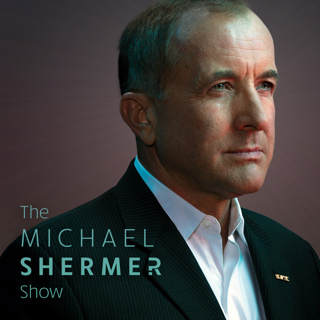
In this fascinating conversation with Michael Shermer, the investigative journalist Nina Teicholz reviews the scientific literature on diet and nutrition, the link (or lack thereof) between dietary cholesterol and heart disease, the history of the government's recommendation of what constitutes a healthy diet and why they got it so wrong, statins and heart disease, exercise and nutrition, an update on what has happened since her book, The Big Fat Surprise, was published in 2014, and most importantly what you should eat for breakfast, lunch, and dinner tomorrow (hint: it's okay to have meat, butter and cheese without feeling guilty).

Nina Teicholz is an investigative science journalist and author. Her international bestseller, The Big Fat Surprise has upended the conventional wisdom on dietary fat—especially saturated fat. The executive editor of The Lancet wrote, "this is a disquieting book about…ruthless silencing of dissent that has shaped our lives for decades…researchers, clinicians, and health policy advisors should read this provocative book." The Big Fat Surprise was named a 2014 Best Book by The Economist, the Wall Street Journal, Forbes, Mother Jones, and Library Journal. Teicholz is also the Executive Director of The Nutrition Coalition, a non-profit group that promotes evidence-based nutrition policy. She is a graduate of Stanford and Oxford Universities and previously served as associate director of the Center for Globalization and Sustainable Development at Columbia University. Teicholz now lives in New York city with her husband and two sons.

This remote Science Salon was recorded on July 19, 2018.

Denne episoden er hentet fra en åpen RSS-feed og er ikke publisert av Podme. Den kan derfor inneholde annonser.

Episoder(642)

Does Consciousness Break the Laws of Physics?

Does Consciousness Break the Laws of Physics?

If we could explain everything happening in your brain, would there still be something left to explain about you? Physicist Avshalom Elitzur thinks so—and argues that accounting for consciousness may ...

22 Sep 46min

Jared Diamond: How Much Can One Person Change History?

Jared Diamond: How Much Can One Person Change History?

Would World War II have happened without Hitler? Would someone else have built Apple without Steve Jobs? Jared Diamond joins Michael Shermer to ask how much history depends on particular people. From ...

15 Sep 1h 29min

Why America Failed to Stop 9/11  |  Gerald Posner & Michael Shermer

Why America Failed to Stop 9/11 | Gerald Posner & Michael Shermer

How did 19 hijackers evade the world's most advanced intelligence apparatus despite years of warnings? Twenty-five years after 9/11, journalist Gerald Posner joins Michael Shermer to explain the secur...

11 Sep 42min

Why Be Honest When Cheating Pays?

Why Be Honest When Cheating Pays?

Most of us think of ourselves as honest. But would we still tell the truth if lying got us what we wanted—and nobody would ever find out? Philosopher Christian Miller joins Michael Shermer to discuss ...

9 Sep 1h 45min

Is the Future Unknowable? Uncertainty, Free Will, and the Limits of Science

Is the Future Unknowable? Uncertainty, Free Will, and the Limits of Science

What if uncertainty isn't a temporary problem science will eventually solve, but a fundamental feature of reality? Neuroscientist Stuart Firestein joins Michael Shermer to make the case that the unive...

1 Sep 1h 23min

Why We Want to Believe in Aliens and Why We Still Haven't Found Them

Why We Want to Believe in Aliens and Why We Still Haven't Found Them

UFOs were once the stuff of tabloids and conspiracy theories. Today they're the subject of congressional hearings, Pentagon investigations, mainstream news coverage, and a new wave of claims about gov...

25 Aug 1h 13min

Is There a Second Arrow of Time? A New Law of Evolution, Information, and Complexity

Is There a Second Arrow of Time? A New Law of Evolution, Information, and Complexity

Why does the universe produce ever more elaborate forms, from atoms and minerals to cells, organisms, brains, technology, and civilization? The familiar laws of physics can explain much of what happen...

18 Aug 1h 18min

Why Good People Disagree About Right and Wrong

Why Good People Disagree About Right and Wrong

Why do reasonable people disagree so strongly about right and wrong? And why are we so quick to assume that people on the other side of a moral or political issue are irrational, selfish, ignorant, or...

11 Aug 1h 57min

Populært innen Vitenskap

fastlegen
romkapsel
tingenes-tilstand
jss
liberal-halvtime
forskningno
sinnsyn
rekommandert
villmarksliv
rss-paradigmepodden
fjellsportpodden
tomprat-med-gunnar-tjomlid
grunnstoffene
nordnorsk-historie
rss-nysgjerrige-norge
tidlose-historier
psykopoden
rss-rekommandert
rss-inn-til-kjernen-med-sunniva-rose
smart-forklart