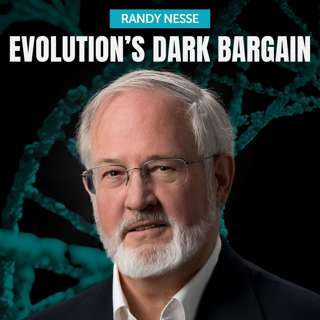

#179 Classic episode – Randy Nesse on why evolution left us so vulnerable to depression and anxiety

#179 Classic episode – Randy Nesse on why evolution left us so vulnerable to depression and anxiety

Mental health problems like depression and anxiety affect enormous numbers of people and severely interfere with their lives. By contrast, we don’t see similar levels of physical ill health in young people. At any point in time, something like 20% of young people are working through anxiety or depression that’s seriously interfering with their lives — but nowhere near 20% of people in their 20s have severe heart disease or cancer or a similar failure in a key organ of the body other than the brain.

From an evolutionary perspective, that’s to be expected, right? If your heart or lungs or legs or skin stop working properly while you’re a teenager, you’re less likely to reproduce, and the genes that cause that malfunction get weeded out of the gene pool.

So why is it that these evolutionary selective pressures seemingly fixed our bodies so that they work pretty smoothly for young people most of the time, but it feels like evolution fell asleep on the job when it comes to the brain? Why did evolution never get around to patching the most basic problems, like social anxiety, panic attacks, debilitating pessimism, or inappropriate mood swings? For that matter, why did evolution go out of its way to give us the capacity for low mood or chronic anxiety or extreme mood swings at all?

Today’s guest, Randy Nesse — a leader in the field of evolutionary psychiatry — wrote the book Good Reasons for Bad Feelings, in which he sets out to try to resolve this paradox.

Rebroadcast: This episode originally aired in February 2024.

Links to learn more, video, and full transcript: https://80k.info/rn

In the interview, host Rob Wiblin and Randy discuss the key points of the book, as well as:

  • How the evolutionary psychiatry perspective can help people appreciate that their mental health problems are often the result of a useful and important system.
  • How evolutionary pressures and dynamics lead to a wide range of different personalities, behaviours, strategies, and tradeoffs.
  • The missing intellectual foundations of psychiatry, and how an evolutionary lens could revolutionise the field.
  • How working as both an academic and a practicing psychiatrist shaped Randy’s understanding of treating mental health problems.
  • The “smoke detector principle” of why we experience so many false alarms along with true threats.
  • The origins of morality and capacity for genuine love, and why Randy thinks it’s a mistake to try to explain these from a selfish gene perspective.
  • Evolutionary theories on why we age and die.
  • And much more.

Chapters:

  • Cold Open (00:00:00)
  • Rob's Intro (00:00:55)
  • The interview begins (00:03:01)
  • The history of evolutionary medicine (00:03:56)
  • The evolutionary origin of anxiety (00:12:37)
  • Design tradeoffs, diseases, and adaptations (00:43:19)
  • The tricker case of depression (00:48:57)
  • The purpose of low mood (00:54:08)
  • Big mood swings vs barely any mood swings (01:22:41)
  • Is mental health actually getting worse? (01:33:43)
  • A general explanation for bodies breaking (01:37:27)
  • Freudianism and the origins of morality and love (01:48:53)
  • Evolutionary medicine in general (02:02:42)
  • Objections to evolutionary psychology (02:16:29)
  • How do you test evolutionary hypotheses to rule out the bad explanations? (02:23:19)
  • Striving and meaning in careers (02:25:12)
  • Why do people age and die? (02:45:16)

Producer and editor: Keiran Harris
Audio Engineering Lead: Ben Cordell
Technical editing: Dominic Armstrong
Transcriptions: Katy Moore

Episoder(333)

#132 – Nova DasSarma on why information security may be critical to the safe development of AI systems

#132 – Nova DasSarma on why information security may be critical to the safe development of AI systems

If a business has spent $100 million developing a product, it's a fair bet that they don't want it stolen in two seconds and uploaded to the web where anyone can use it for free. This problem exists...

14 Jun 20222h 42min
#131 – Lewis Dartnell on getting humanity to bounce back faster in a post-apocalyptic world

#131 – Lewis Dartnell on getting humanity to bounce back faster in a post-apocalyptic world

“We’re leaving these 16 contestants on an island with nothing but what they can scavenge from an abandoned factory and apartment block. Over the next 365 days, they’ll try to rebuild as much of civili...

3 Jun 20221h 5min

#130 – Will MacAskill on balancing frugality with ambition, whether you need longtermism, & mental health under pressure

#130 – Will MacAskill on balancing frugality with ambition, whether you need longtermism, & mental health under pressure

Imagine you lead a nonprofit that operates on a shoestring budget. Staff are paid minimum wage, lunch is bread and hummus, and you're all bunched up on a few tables in a basement office. But over a fe...

23 Mai 20222h 16min
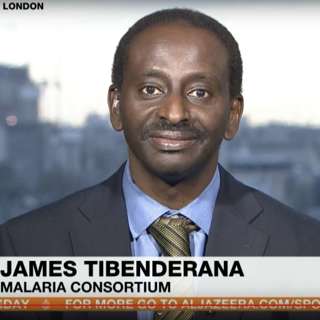
#129 – James Tibenderana on the state of the art in malaria control and elimination

#129 – James Tibenderana on the state of the art in malaria control and elimination

The good news is deaths from malaria have been cut by a third since 2005. The bad news is it still causes 250 million cases and 600,000 deaths a year, mostly among young children in sub-Saharan Africa...

9 Mai 20223h 19min

#128 – Chris Blattman on the five reasons wars happen

#128 – Chris Blattman on the five reasons wars happen

In nature, animals roar and bare their teeth to intimidate adversaries — but one side usually backs down, and real fights are rare. The wisdom of evolution is that the risk of violence is just too gre...

28 Apr 20222h 46min
#127 – Sam Bankman-Fried on taking a high-risk approach to crypto and doing good

#127 – Sam Bankman-Fried on taking a high-risk approach to crypto and doing good

On this episode of the show, host Rob Wiblin interviews Sam Bankman-Fried. This interview was recorded in February 2022, and released in April 2022. But on November 11 2022, Sam Bankman-Fried's co...

14 Apr 20223h 20min

#126 – Bryan Caplan on whether lazy parenting is OK, what really helps workers, and betting on beliefs

#126 – Bryan Caplan on whether lazy parenting is OK, what really helps workers, and betting on beliefs

Everybody knows that good parenting has a big impact on how kids turn out. Except that maybe they don't, because it doesn't.Incredible though it might seem, according to today's guest — economist Brya...

5 Apr 20222h 15min

#125 – Joan Rohlfing on how to avoid catastrophic nuclear blunders

#125 – Joan Rohlfing on how to avoid catastrophic nuclear blunders

Since the Soviet Union split into different countries in 1991, the pervasive fear of catastrophe that people lived with for decades has gradually faded from memory, and nuclear warhead stockpiles have...

29 Mar 20222h 13min

Populært innen Fakta

fastlegen
dine-penger-pengeradet
relasjonspodden-med-dora-thorhallsdottir-kjersti-idem
rss-strid-de-norske-borgerkrigene
foreldreradet
mikkels-paskenotter
treningspodden
rss-bisarr-historie
jakt-og-fiskepodden
rss-sunn-okonomi
sinnsyn
tomprat-med-gunnar-tjomlid
rss-kunsten-a-leve
hagespiren-podcast
rss-bak-luftfarten
ukast
fryktlos
hverdagspsyken
rss-mind-body-podden
gravid-uke-for-uke