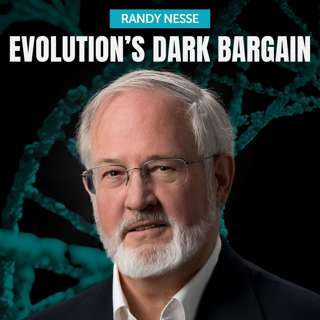
#179 Classic episode – Randy Nesse on why evolution left us so vulnerable to depression and anxiety

#179 Classic episode – Randy Nesse on why evolution left us so vulnerable to depression and anxiety

Mental health problems like depression and anxiety affect enormous numbers of people and severely interfere with their lives. By contrast, we don’t see similar levels of physical ill health in young people. At any point in time, something like 20% of young people are working through anxiety or depression that’s seriously interfering with their lives — but nowhere near 20% of people in their 20s have severe heart disease or cancer or a similar failure in a key organ of the body other than the brain.

From an evolutionary perspective, that’s to be expected, right? If your heart or lungs or legs or skin stop working properly while you’re a teenager, you’re less likely to reproduce, and the genes that cause that malfunction get weeded out of the gene pool.

So why is it that these evolutionary selective pressures seemingly fixed our bodies so that they work pretty smoothly for young people most of the time, but it feels like evolution fell asleep on the job when it comes to the brain? Why did evolution never get around to patching the most basic problems, like social anxiety, panic attacks, debilitating pessimism, or inappropriate mood swings? For that matter, why did evolution go out of its way to give us the capacity for low mood or chronic anxiety or extreme mood swings at all?

Today’s guest, Randy Nesse — a leader in the field of evolutionary psychiatry — wrote the book Good Reasons for Bad Feelings, in which he sets out to try to resolve this paradox.

Rebroadcast: This episode originally aired in February 2024.

Links to learn more, video, and full transcript: https://80k.info/rn

In the interview, host Rob Wiblin and Randy discuss the key points of the book, as well as:

  • How the evolutionary psychiatry perspective can help people appreciate that their mental health problems are often the result of a useful and important system.
  • How evolutionary pressures and dynamics lead to a wide range of different personalities, behaviours, strategies, and tradeoffs.
  • The missing intellectual foundations of psychiatry, and how an evolutionary lens could revolutionise the field.
  • How working as both an academic and a practicing psychiatrist shaped Randy’s understanding of treating mental health problems.
  • The “smoke detector principle” of why we experience so many false alarms along with true threats.
  • The origins of morality and capacity for genuine love, and why Randy thinks it’s a mistake to try to explain these from a selfish gene perspective.
  • Evolutionary theories on why we age and die.
  • And much more.

Chapters:

  • Cold Open (00:00:00)
  • Rob's Intro (00:00:55)
  • The interview begins (00:03:01)
  • The history of evolutionary medicine (00:03:56)
  • The evolutionary origin of anxiety (00:12:37)
  • Design tradeoffs, diseases, and adaptations (00:43:19)
  • The tricker case of depression (00:48:57)
  • The purpose of low mood (00:54:08)
  • Big mood swings vs barely any mood swings (01:22:41)
  • Is mental health actually getting worse? (01:33:43)
  • A general explanation for bodies breaking (01:37:27)
  • Freudianism and the origins of morality and love (01:48:53)
  • Evolutionary medicine in general (02:02:42)
  • Objections to evolutionary psychology (02:16:29)
  • How do you test evolutionary hypotheses to rule out the bad explanations? (02:23:19)
  • Striving and meaning in careers (02:25:12)
  • Why do people age and die? (02:45:16)

Producer and editor: Keiran Harris
Audio Engineering Lead: Ben Cordell
Technical editing: Dominic Armstrong
Transcriptions: Katy Moore

Episoder(333)

#124 – Karen Levy on fads and misaligned incentives in global development, and scaling deworming to reach hundreds of millions

#124 – Karen Levy on fads and misaligned incentives in global development, and scaling deworming to reach hundreds of millions

If someone said a global health and development programme was sustainable, participatory, and holistic, you'd have to guess that they were saying something positive. But according to today's guest Kar...

21 Mar 20223h 9min

#123 – Samuel Charap on why Putin invaded Ukraine, the risk of escalation, and how to prevent disaster

#123 – Samuel Charap on why Putin invaded Ukraine, the risk of escalation, and how to prevent disaster

Russia's invasion of Ukraine is devastating the lives of Ukrainians, and so long as it continues there's a risk that the conflict could escalate to include other countries or the use of nuclear weapon...

14 Mar 202259min

#122 – Michelle Hutchinson & Habiba Islam on balancing competing priorities and other themes from our 1-on-1 careers advising

#122 – Michelle Hutchinson & Habiba Islam on balancing competing priorities and other themes from our 1-on-1 careers advising

One of 80,000 Hours' main services is our free one-on-one careers advising, which we provide to around 1,000 people a year. Today we speak to two of our advisors, who have each spoken to hundreds of p...

9 Mar 20221h 36min
Introducing 80k After Hours

Introducing 80k After Hours

Today we're launching a new podcast called 80k After Hours. Like this show it’ll mostly still explore the best ways to do good — and some episodes will be even more laser-focused on careers than mos...

1 Mar 202213min

#121 – Matthew Yglesias on avoiding the pundit's fallacy and how much military intervention can be used for good

#121 – Matthew Yglesias on avoiding the pundit's fallacy and how much military intervention can be used for good

If you read polls saying that the public supports a carbon tax, should you believe them? According to today's guest — journalist and blogger Matthew Yglesias — it's complicated, but probably not. Link...

16 Feb 20223h 4min

#120 – Audrey Tang on what we can learn from Taiwan’s experiments with how to do democracy

#120 – Audrey Tang on what we can learn from Taiwan’s experiments with how to do democracy

In 2014 Taiwan was rocked by mass protests against a proposed trade agreement with China that was about to be agreed without the usual Parliamentary hearings. Students invaded and took over the Parlia...

2 Feb 20222h 5min
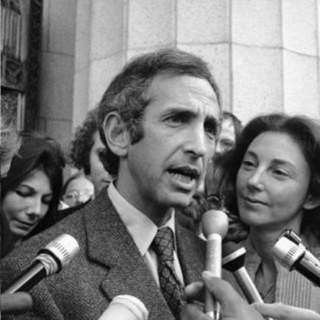
#43 Classic episode - Daniel Ellsberg on the institutional insanity that maintains nuclear doomsday machines

#43 Classic episode - Daniel Ellsberg on the institutional insanity that maintains nuclear doomsday machines

Rebroadcast: this episode was originally released in September 2018.In Stanley Kubrick’s iconic film Dr. Strangelove, the American president is informed that the Soviet Union has created a secret dete...

18 Jan 20222h 35min

#35 Classic episode - Tara Mac Aulay on the audacity to fix the world without asking permission

#35 Classic episode - Tara Mac Aulay on the audacity to fix the world without asking permission

Rebroadcast: this episode was originally released in June 2018. How broken is the world? How inefficient is a typical organisation? Looking at Tara Mac Aulay’s life, the answer seems to be ‘very’. A...

10 Jan 20221h 23min

Populært innen Fakta

fastlegen
dine-penger-pengeradet
relasjonspodden-med-dora-thorhallsdottir-kjersti-idem
rss-strid-de-norske-borgerkrigene
foreldreradet
mikkels-paskenotter
treningspodden
rss-bisarr-historie
jakt-og-fiskepodden
rss-sunn-okonomi
sinnsyn
tomprat-med-gunnar-tjomlid
rss-kunsten-a-leve
hagespiren-podcast
rss-bak-luftfarten
ukast
fryktlos
hverdagspsyken
rss-mind-body-podden
gravid-uke-for-uke